

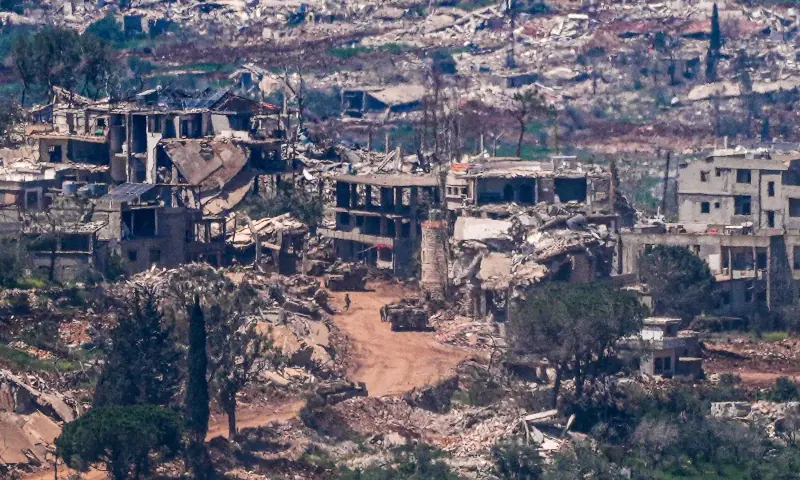
Israel and Lebanon extended a shaky ceasefire by three weeks, President Donald Trump said on Thursday, as the United States remained deadlocked in negotiations with Iran to end the Middle East war.
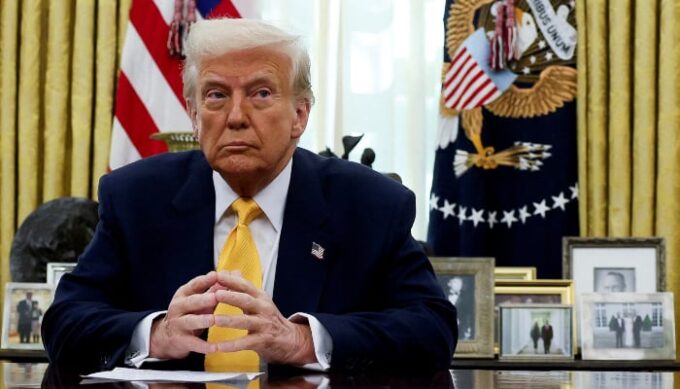
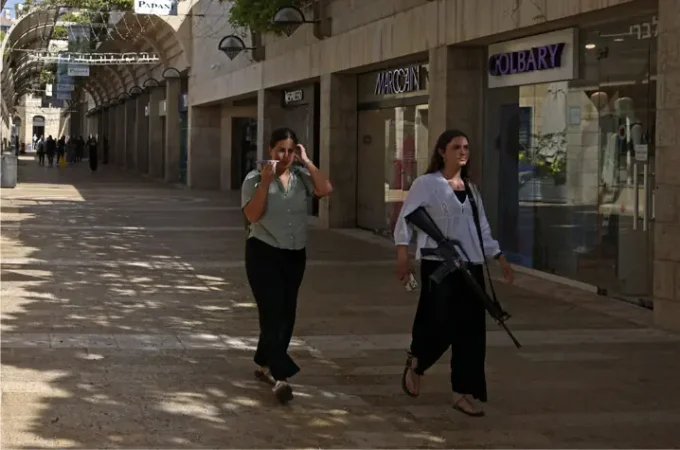
Trump announced the truce extension while meeting ambassadors of both countries, despite recent Israeli strikes in Lebanon and fresh rocket fire from Hezbollah, which was not part of the Washington talks.
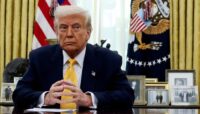
“I think there’s a very good chance of having peace. I think it should be an easy one,” Trump told reporters, adding that the initial truce was set to expire on Sunday.
However, the US president also said he was in no rush to end the war with Iran, warning that “the clock is ticking” for the Islamic republic as a third American aircraft carrier arrived in the Middle East.
Iranian media reported blasts over Tehran, marking the first such incident since the ceasefire in the Middle East war came into effect two weeks earlier.
It remained unclear what caused the explosions, though an Israeli security source told AFP that Israel was not currently carrying out strikes on Iran.
Prospective peace talks in Pakistan were also hanging in the balance, with no sign of a return to diplomacy to resolve tensions in the Strait of Hormuz.
Since the ceasefire, the United States and Iran have shifted focus to the Strait of Hormuz, a key global oil route through which nearly a fifth of the world’s oil and liquefied natural gas flows, while Iran has effectively restricted access in response to the conflict.
“I have all the time in the World, but Iran doesn’t — The clock is ticking!” Trump said on social media.
Trump, who ruled out the use of a nuclear weapon against Iran, earlier ordered the US Navy to destroy any Iranian boats laying mines in the Strait of Hormuz.
The USS George H.W. Bush aircraft carrier arrived in the Middle East, bringing the number of US warships in the region to three, according to the US military.
A second carrier was operating in the Red Sea, while a third remained deployed in the region, according to US Central Command (Centcom) posts on social media.
Iran’s state news agency IRNA reported the “sound of air defence firing” in western Tehran, while Mehr news agency said air defence systems were activated in several parts of the capital to counter “hostile targets.”
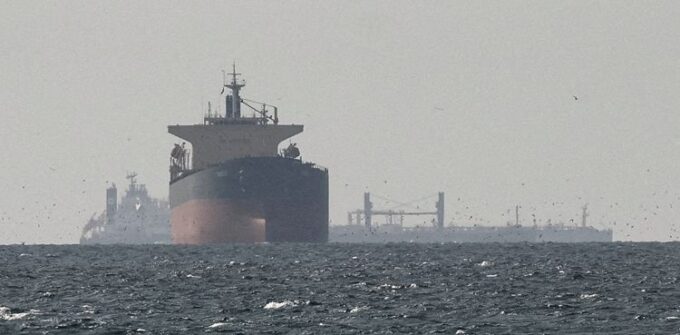
Earlier, US forces boarded a vessel in the Indian Ocean carrying Iranian oil, while a senior Iranian official said Tehran had received its first proceeds from tolls imposed on shipping through the Strait of Hormuz.
Trump said he had “ordered the United States Navy to shoot and kill” any boats laying mines in the Strait of Hormuz.
Israel’s Defence Minister Israel Katz said “we are awaiting a green light from the United States” to complete the elimination of Iran’s leadership and push the country into a severe strategic setback.
Iran, meanwhile, vowed to keep the Strait of Hormuz closed to most shipping except approved vessels as long as the US naval blockade continues, rejecting Trump’s demands to reopen the waterway and surrender enriched uranium.
The United States has also imposed its own blockade of Iranian ports, while the Pentagon said US forces intercepted a sanctioned oil tanker in the Indian Ocean.
Deputy parliament speaker Hamidreza Hajibabaei said Iran had begun receiving revenue from tolls imposed on ships crossing the Strait of Hormuz.
In response to Trump’s comments suggesting fractures in Iran’s leadership, the president, parliament speaker, and chief justice issued a unified message stating: “One God, one nation, one leader, and one path; that path being the path to the victory of our dearer-than-life Iran.”
A post on Supreme Leader Mojtaba Khamenei’s X account accused foreign media of attempting to weaken national unity and security, following reports about internal conditions within Iran’s leadership.
Trump also told the New York Post that talks could resume in Pakistan within two to three days, although no official delegations were confirmed to be heading to Islamabad.
Security remained tight in the Pakistani capital for a fourth consecutive day amid speculation over possible diplomatic negotiations.
Iran’s Revolutionary Guards said they had forced two ships to the Iranian shore from the Strait of Hormuz, while Centcom reported that US forces had “redirected 33 vessels” since the blockade began.
European leaders are expected to meet on Friday with counterparts from Lebanon, Egypt, Syria, and Jordan for what an EU official described as “intensive dialogue” over the escalating crisis linked to the Strait of Hormuz closure.



Leave a comment