


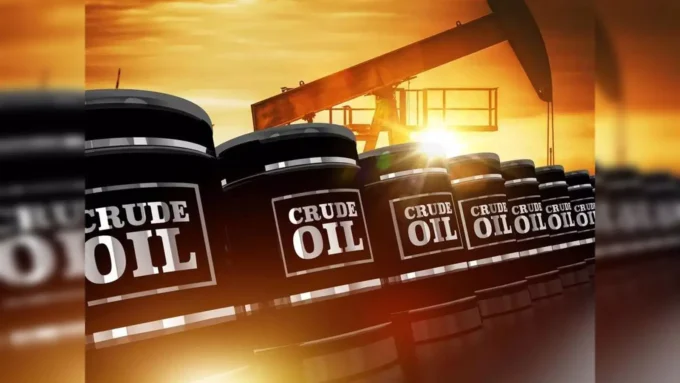
Oil prices edged higher on Monday, recovering some ground after a steep decline last week that sent global benchmarks to their lowest levels in five months. The rebound came as investors pinned hopes on possible talks between US President Donald Trump and Chinese President Xi Jinping, which could ease the mounting trade tensions between the world’s two largest economies — and top oil consumers.
By early trading in Asia, Brent crude futures rose 87 cents, or 1.39%, to $63.60 a barrel at 0045 GMT, after tumbling 3.82% on Friday to their weakest since May 7. US West Texas Intermediate (WTI) climbed 87 cents, or 1.48%, to $59.77 a barrel, recovering slightly from a 4.24% plunge that also marked a five-month low.
Markets Eye Trump–Xi Meeting
The modest rebound followed a volatile week driven by renewed US-China trade frictions. Tensions escalated sharply after Beijing expanded its export controls on rare earth materials, a move widely seen as a strategic response to Washington’s tightening technology and trade restrictions. In retaliation, President Trump on Friday imposed 100% tariffs on all Chinese exports bound for the United States, alongside new export controls on critical software set to take effect on November 1.
However, optimism grew after reports suggested that both leaders could meet later this month on the sidelines of the Asia-Pacific Economic Cooperation (APEC) forum in South Korea, raising hopes of a diplomatic thaw.
“The key question for markets is whether these measures are actually implemented, with potentially severe consequences for global supply chains — especially in high-tech manufacturing — or if they are merely tactical moves to gain leverage ahead of talks,” analysts at Goldman Sachs said in a note.
They added that the most plausible outcome was that “both sides will likely pull back on the most aggressive policies,” resulting in an extension of the tariff pause reached in May, though risks of renewed escalation remain.
Global and Historical Context
Oil markets have been particularly sensitive to trade developments this year, as the dispute between Washington and Beijing has weighed heavily on global demand growth and investor sentiment. Crude prices previously tumbled in March and April when tariff threats and retaliatory measures were at their peak.
China’s latest move to expand rare earth export restrictions last Thursday further unsettled markets. The minerals, critical to the production of electric vehicles, military technology, and semiconductors, have become a focal point in the economic rivalry between the two powers.
Geopolitical Factors Add to Volatility
Beyond the trade front, geopolitical developments in the Middle East also influenced market sentiment. Over the weekend, President Trump declared that the “Gaza war is over”, ahead of his arrival in Israel, where he is expected to meet leaders and oversee the first phase of a hostage-prisoner exchange under a fragile ceasefire deal brokered by Washington.
While the announcement brought a brief sense of stability to regional markets, analysts warned that the ongoing political uncertainty could still impact energy supplies from the broader region, which remains a key oil-producing hub.
Outlook
For now, oil traders are watching closely to see whether Washington and Beijing move toward renewed dialogue or deepen their confrontation through additional sanctions and export bans. A successful meeting between Trump and Xi could ease market anxiety and support a more sustained price recovery.
Still, with both economies showing signs of slowing and global demand forecasts under pressure, analysts remain cautious. “The rebound we’re seeing today may prove temporary,” one trader said, noting that a prolonged trade standoff could continue to cap oil price gains.











Leave a comment