

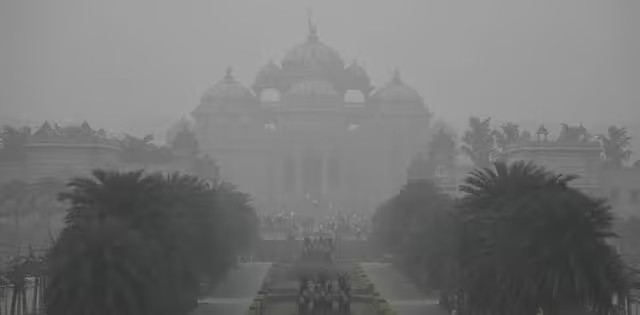
New Delhi and its surrounding National Capital Region (NCR) are once again under a thick blanket of toxic haze, as air-pollution levels have surged to dangerous heights. The Air Quality Index (AQI) in many parts of the city has entered the “severe” category, prompting health warnings, emergency measures and widespread disruption.
Authorities say that the current pollution episode has been driven by a combination of factors: crop-residue burning in neighboring states, vehicle emissions, industrial pollution, construction dust and stagnant weather conditions that trap pollutants near the ground. As temperatures drop and wind speeds slow with the onset of winter, the smog is becoming more persistent and concentrated.
In parts of Delhi-NCR, visibility has fallen to near-zero as the haze thickens. Residents report burning eyes, throat irritation, difficulty breathing and heavy coughing. Doctors have said that many patients suffering from asthma or other respiratory conditions have experienced flare-ups, and they warn that long-term exposure to fine particulate matter (PM2.5) could contribute to chronic lung and heart disease.
In response, the regional air-quality authority has invoked emergency pollution-control measures — restricting construction, limiting heavy-vehicle movements, and advising people to avoid outdoor activities. Schools have been asked to switch to online lessons temporarily in some districts, and many residents are being urged to wear masks and use air purifiers indoors.
Environmental experts say that while these short-term steps are necessary, they are insufficient to address the underlying causes of Delhi’s air-toxicity crisis. They point out that the city’s geography, weather, energy infrastructure, transport emissions and agricultural-burning practices all contribute to a systemic problem that recurs annually.
Meanwhile, public frustration is growing. Social-media posts show long queues at air-purifier stores, commuters wearing full-face masks, and highways that seem shrouded by brown-grey smog more reminiscent of industrial zones than a national capital. Some residents say their children are playing indoors instead of outside, and fitness routines have been disrupted by the hazardous air.
As the pollution season deepens, the prospects for rapid improvement appear limited without significant rainfall and stronger enforcement of burning bans in surrounding states. For now, New Delhi once again finds itself gasping under a toxic blanket — a reminder of the persistent struggle between economic growth, energy demand and environmental health.















Leave a comment